How to Cook Frozen Fish in an Air Fryer Oven
You can cook frozen fish straight in an air fryer oven without thawing it. Set the oven to about 390°F, put the fillets in the air fry basket with space between them, and allow roughly 12 to 18 minutes depending on thickness.
On this page (9 sections)
- How do you cook frozen fish in an air fryer oven step by step?
- What temperature and time should you use for frozen fish?
- Why should you use the air fry basket instead of a flat pan?
- Should you thaw frozen fish before air frying it?
- How do you keep frozen fish from drying out or sticking?
- Which air fryer oven suits frozen fish?
- How do you know when frozen fish is fully cooked?
- What should you do with leftovers and cleanup?
- The short version of cooking frozen fish in an air fryer oven
You can cook frozen fish straight in an air fryer oven without thawing it. Set the oven to about 390°F, arrange the fillets in the air fry basket with space between them, and allow roughly 12 to 18 minutes depending on thickness.
Cooking frozen fish in an air fryer oven works because the fan pushes hot air around all sides, so the outside crisps while the middle cooks through.
The method is short, but the details matter: a crowded basket steams instead of crisps, and a thick fillet needs more time than a thin one. The steps below cover both.
How do you cook frozen fish in an air fryer oven step by step?
Preheat to 390°F, line the basket, season the frozen fillets, and cook for 12 to 18 minutes, flipping once. That order keeps the coating crisp and the fish from sticking.
- Preheat the oven for 3 to 5 minutes on the Air Fry setting.
- Spray the air fry basket lightly or set the fillets on a small sheet of parchment with holes.
- Pat any loose ice off the fillets, then season or spray with oil.
- Space the pieces at least half an inch apart in a single layer.
- Cook 6 to 9 minutes, flip, then finish until the center is opaque and flaky.
Check the thickest part with an instant-read thermometer. Fish is done at 145°F, and frozen fillets can look browned outside while still cold inside.
A basket with a wide, flat base makes this easier than a deep fryer-style basket. The included air fry basket in these ovens sits close to the heating element, so a single layer browns evenly without you shaking the basket halfway.
What temperature and time should you use for frozen fish?
Use 390°F as your starting point, with a window of 375°F to 400°F. Most frozen fillets land in the 12 to 18 minute range at that heat.
Thin fillets, fish sticks, and breaded portions crisp fast, so start at 400°F and check at 10 minutes. A thick cod or salmon fillet benefits from 375°F and a little more time, so the center cooks before the crust darkens too much.
| Fish type | Temperature | Time |
|---|---|---|
| Thin fillets (tilapia, sole) | 400°F | 10–12 min |
| Standard fillets (cod, haddock) | 390°F | 12–15 min |
| Thick fillets (salmon, halibut) | 375°F | 15–18 min |
| Breaded fish sticks | 400°F | 10–12 min |
These are starting points. Ovens vary, so the first batch tells you how yours runs.
Frozen fish also releases water as it heats, and that moisture cools the oven slightly. Expect the first few minutes to look pale and damp; browning starts once the surface water cooks off.
That is why the time window runs longer than fresh fish.
Why should you use the air fry basket instead of a flat pan?
The basket lets hot air reach the underside, which is where crispness comes from. A solid pan traps moisture under the fish and leaves the bottom pale and soft.
The basket also drains any water that comes off the frozen fillet. That matters because frozen fish releases more liquid than fresh, and standing water turns a crispy coating soggy.
Use a sheet pan when the fillet is delicate, glazed, or likely to fall through the basket gaps. A wire rack set on the sheet pan gives you a middle option: support below, airflow around the sides.
To understand why the fan changes the result, see what an air fryer oven is and how it moves heat compared with a plain toaster oven.
Should you thaw frozen fish before air frying it?
No. For most frozen fillets, cooking from frozen gives a better result than thawing first.
The outside crisps while the inside stays moist, and you skip a step.
Thawing is worth it only when the fillet is very thick, over about 1.5 inches, because the outside can overbrown before the center thaws and cooks. In that case, thaw in the fridge overnight and cook at 375°F for 10 to 12 minutes.
Never thaw fish on the counter. Keep it in the fridge if you plan ahead, and cook it the same day it thaws.
One more point in favor of the freezer-to-oven route: frozen fillets hold their shape better. A thawed fillet goes limp and can bend through the basket gaps, while a still-frozen piece stays flat and firm until it sets.
How do you keep frozen fish from drying out or sticking?
A light oil spray and a single, uncrowded layer handle most of the problem. Oil helps browning and keeps the surface from sticking to the basket.
Crowding is the bigger risk. Two fillets with room around them crisp better than four pressed together, so cook in batches for a family meal.
If the coating starts to darken too fast, drop the heat to 375°F rather than shortening the time. For a crunchy finish, spritz the top with oil halfway through.
Seasoning sticks best to a lightly oiled surface. Salt and pepper work fine, but hold off on wet marinades until the last few minutes, since sugar burns quickly at high heat.
Which air fryer oven suits frozen fish?
Any air fryer oven with a basket and a fan works; the choice comes down to capacity and shelf space. The three below all reach the temperatures this method needs.
Ninja Flip Toaster Oven & Air Fryer SP151
Best for small kitchens that still cook family portions. It uses OvenCrisp technology, combining infrared heating with circulating air for even cooking, and it flips up to store against the backsplash.
It fits 4 lbs of ingredients, a 12-inch pizza, or 6 chicken breasts, and reaches 85°F to 450°F. That range covers a fast 400°F crisp on fish sticks and a gentler 375°F on thick fillets.
Six infrared heating elements sit behind that range, so the oven heats quickly and holds its temperature when you open the door to flip.
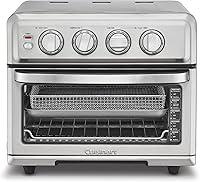
Cuisinart 8-in-1 Air Fryer Toaster Oven
Best for cooks who want a basket, a grill plate, and a baking pan in one box. Its AirAdvantage top fan and heater push hot air down onto the food, and the temperature dial runs from Warm to 450°F with a 60-minute timer.
The 0.6 cubic foot interior handles 3 lbs of chicken wings or a 12-inch pizza, so a full tray of fish fillets fits without stacking. The 60-minute timer and auto-shutoff mean a forgotten batch will not run past its time.
A toast shade selector is there for bread days, and the included reversible grill and griddle gives you a flat surface when a fillet is too soft for the basket.
Ninja Foodi XL Pro Air Fry Oven DT201
Best for batch cooking and larger households. True Surround Convection cooks on two levels at once with no rotating, and the 21-liter capacity fits a 5-lb chicken, two 12-inch pizzas, or a sheet pan of vegetables.
A 90-second preheat and up to 30% faster cooking than a full-size convection oven mean dinner is quick even from frozen. The digital display handle lights the best rack position for the function you pick and freezes the settings when the door opens, so flipping a fillet does not reset the cook time.
For two trays of fish at once, that two-level cooking is the feature that matters most.
How do you know when frozen fish is fully cooked?
The center should be opaque and flaky, and an instant-read thermometer should read 145°F. Color alone misleads, because a browned crust can hide a cold middle.
Press the thickest part with a fork. It should separate into flakes with no translucent pink.
If it resists, give it 2 more minutes and check again.
Let the fish rest for 2 minutes before serving. Carryover heat finishes the center, and the juices settle back into the flesh.
What should you do with leftovers and cleanup?
Cool leftovers within 2 hours, refrigerate them, and reheat to 165°F. Fish keeps about 3 days in a sealed container.
For cleanup, let the basket cool, then soak it in warm soapy water. Cooked-on coating lifts easily after 10 minutes.
A removable crumb tray catches the flakes and stray coating, so pull it out and empty it while the oven is still warm but not hot.
Wipe the interior with a damp cloth once it cools, and empty the crumb tray after every few uses. Our guide to cooking in a toaster oven covers general oven care, and if you also bake in the same appliance, see whether you can cook pizza in a toaster oven.
The short version of cooking frozen fish in an air fryer oven
Set 390°F, use the basket, keep the fillets apart, and flip once. Cooking frozen fish in an air fryer oven takes about 12 to 18 minutes, and a thermometer at 145°F is your real finish line.
Pick the Ninja SP151 if counter space is tight, the Cuisinart TOA-70 for its basket-plus-grill setup, or the Ninja DT201 when you cook for a crowd on two levels. For a first run, buy one bag of frozen fillets and note the time your oven needs; that number becomes your go-to.
Frequently asked questions
What temperature should an air fryer oven be set to for frozen fish?
Set it to about 390°F for most frozen fillets and fish sticks. A range of 375°F to 400°F also works: lower for a thicker fillet that needs more time inside, higher for thin portions or breaded pieces that should crisp fast.
Should you flip frozen fish halfway through cooking?
Yes, flip it once at the halfway mark. The hot air moves around the basket, but the side facing the heating element browns faster, so turning the fillet gives you an even crust and a more even internal temperature.
Do you need oil when air frying frozen fish?
Only a light coating. A quick spray of oil helps seasoning stick and improves browning on plain fillets.
Breaded frozen fish already carries oil in its coating, so it usually needs nothing extra.
Can you cook frozen fish from frozen in a basket or on a tray?
Use the air fry basket for the crispiest result and a sheet pan for delicate fillets that might fall apart. The basket lets hot air reach the underside, while a pan is easier for anything with a wet glaze or a soft texture.