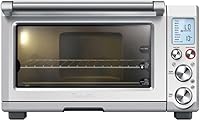
Toaster Oven Settings Explained: Bake, Broil, Convection
Toaster oven settings work best when you match the function to the food: bake for steady cooking, broil for top browning, and convection for fan-circulated heat. Check your manual for rack positions and model-specific temperature guidance.
On this page (12 sections)
- What do the main toaster oven settings do?
- When should you use bake?
- When should you use broil?
- What does convection do in a toaster oven?
- How do toast and warm differ from bake?
- How do toaster oven settings change for air fry and special functions?
- How do you choose the right toaster oven settings?
- How should you set up a toaster oven?
- What mistakes should you avoid with toaster oven settings?
- How do you care for a toaster oven?
- What should you check before changing a recipe?
- Which toaster oven settings should you choose?
Toaster oven settings determine whether food cooks steadily, browns from above, or gets hot air circulated around it. Bake suits everyday oven-style cooking, broil gives direct top heat, and convection adds fan-driven airflow.
The right choice depends on the food, the result you want and the controls your oven actually has. Start with the manual and recipe, then check food early until you know how your oven behaves.
If you're learning the controls, our beginner’s guide to cooking in a toaster oven covers setup and basic use.
What do the main toaster oven settings do?
Bake, broil and convection describe how heat reaches food; toast, warm and air fry are separate functions that may combine heat sources or airflow. Controls and names vary, so use the manual to confirm what each setting does on your model.
| Setting | How it works | Useful for | Watch for |
|---|---|---|---|
| Bake | Uses heating elements for steady cooking | Casseroles, cookies and baked potatoes | Food may brown faster near an element |
| Broil | Directs strong heat from above | Melting cheese and browning a finished dish | Food can scorch quickly |
| Convection | Uses a fan to circulate hot air | Roasting and browning when airflow suits the food | Check early because cooking may be faster |
| Toast | Heats bread for browning | Bread, bagels and English muffins | Set the shade if available |
| Warm | Holds cooked food at low heat | Keeping food ready briefly | It does not cook raw food |
Treat the chart as a starting point, not a substitute for model directions. A convection function, rack position or recommended pan can differ from one oven to another.
When should you use bake?
Use bake when food needs steady heat to cook through and the recipe does not call for a fan. It suits small casseroles, baked potatoes, cookies and other dishes that fit with space around them.
Set the rack where the recipe and manual direct. A countertop oven has a smaller cavity than a full-size oven, so a pan can sit closer to a heating element and brown more quickly.
Use the recipe temperature as your starting point. If you are unsure how quickly food will cook, begin checking before the recipe’s full-size oven time ends and adjust on the next attempt.
For a crisp top, bake the dish through first, then use a short broil finish if your manual permits. For pizza, see our guide to cooking pizza in a toaster oven.
When should you use broil?
Use broil when you want strong heat from above to melt or brown the surface of food. It works best as a quick finishing step for food that is already cooked or nearly done.
Broiling needs close attention because food can go from browned to scorched quickly. Use the rack position and cookware specified by your manual, and stay beside the oven while it runs.
Avoid broiling food in cookware that is not rated for that heat. Sugary sauces and thin foods can darken fast, so keep the oven in view and stop the cycle as soon as the surface looks right.
Read when to use a toaster oven’s broil setting for more detail on choosing a rack position and watching food.
What does convection do in a toaster oven?
Convection uses a fan to circulate hot air around the oven cavity. The moving air can support faster cooking or more even browning, but the result depends on the oven, pan and amount of food inside.
Choose convection when the recipe or manual recommends it, or when airflow suits roasting and browning. Leave space around pans and food so air can move, and check doneness earlier than you would in a full-size oven.
Some recipes recommend lowering the temperature or shortening the time for convection. There is no single adjustment for every oven, so follow your model’s guidance and treat any recipe change as a starting point.
Convection may be useful if you cook several foods that benefit from moving air. Our toaster oven vs. convection oven guide explains where the appliance types overlap.
How do toast and warm differ from bake?
Toast browns bread, while warm holds already-cooked food at low heat for a short time. Neither function should replace bake when a recipe needs to cook through.
Use the shade control, if available, to set how dark you want bread. For thicker slices or bagels, check the first cycle and adjust the shade for the next one.
Warm is useful when you need a short pause before serving, but it does not replace proper food storage. Check your manual for how the function is intended to be used.
How do toaster oven settings change for air fry and special functions?
Air fry functions use heat and airflow to crisp food, while settings such as slow cook or dehydrate serve different cooking jobs. Read the manual for the right accessory, rack position and food spacing before starting an unfamiliar mode.
An air fry basket can allow air to reach more sides of food than a solid pan. Avoid piling food into a dense layer when crisping matters, since crowded food can block airflow.
A model with more functions can suit a cook who expects to use them often. The Breville Smart Oven Pro has bake, broil, toast, pizza, cookies, reheat, warm and slow cook functions, while the Cuisinart TOA-70 adds air fry, grill and convection options.
For the Nuwave Bravo XL Pro, the control system allows adjustment of upper and lower heater power and fan speed. That flexibility may suit someone who wants to tailor cooking, but it can be unnecessary if you mainly toast bread or bake simple meals.
How do you choose the right toaster oven settings?
Match the function to the result you want, then check your manual for model-specific directions. Bake cooks food through, broil browns the top, convection circulates hot air, toast browns bread, and warm holds cooked food briefly.
- Choose bake for steady cooking when the recipe does not call for fan circulation.
- Choose broil for quick surface browning, and remain beside the oven.
- Choose convection when airflow fits the recipe or helps with roasting.
- Choose toast for bread when a dedicated function is available.
- Choose warm to hold cooked food briefly, not to cook it from raw.
- Choose air fry when your model has that function and the food benefits from circulating heat.
The best setting also depends on what you cook most. If you mostly make toast, a simple shade selector may matter more than several specialty modes; if you roast, crisp or cook whole meals, convection and air fry can earn their place.
Which toaster oven settings suit your cooking style?
For everyday baking and a broad mix of functions, the Breville Smart Oven Pro is a fit for cooks who want bake, broil, pizza, cookies, reheat and slow cook in one countertop oven. Skip it if your main need is a compact, fold-away appliance or an air fry basket.
The Cuisinart TOA-70 suits cooks who want air fry, convection, broil and grill functions, plus a reversible grill/griddle. Skip it if you prefer a small appliance with only basic toast and bake controls.
The Ninja SP101 is a fit when you want air fry, toast, roast, broil, bake, bagel, dehydrate and keep warm, with a design that flips up for storage. Skip it if your cabinet or backsplash setup does not leave room for it to fold upright.
The Nuwave Bravo XL Pro suits cooks who want many presets, heater and fan adjustments, and a temperature probe. Skip it if you want a very simple control panel or do not need its extra cooking modes.
Before choosing among them, measure the available counter or storage area and consider whether the accessories and functions match meals you actually make. More settings do not help if you will rarely use them.
How should you set up a toaster oven?
Set the oven on a stable, heat-safe counter with the clearance required by its manual. Keep it away from items that can melt or catch fire, and make sure its door can open without hitting a wall or cabinet.
Before the first meal, remove packaging, check the included accessories and identify the crumb tray, rack positions and controls. Follow the manual’s first-use instructions, including any required empty heating cycle or ventilation advice.
Place the oven rack and pan before preheating if the manual recommends it. Use cookware that fits without touching the walls or elements, and leave room for air circulation when using convection.
Know which accessories belong to which function. A rack, baking pan, air fry basket or grill plate is designed for a particular task, and the manual can tell you where to place it and whether it is safe for that mode.
What mistakes should you avoid with toaster oven settings?
The most common mistakes are choosing a function by name alone, crowding food, leaving broiling unattended and using the wrong pan or foil placement. Each can lead to uneven cooking or a safety problem.
- Do not assume every oven’s convection mode behaves the same. Check the manual and begin checking food early.
- Do not crowd the pan. Food and pans need room for airflow, especially when using convection or air fry.
- Do not walk away during broiling. Direct top heat can brown or burn food quickly.
- Do not block the crumb tray or vents. Keep them clear according to the manual.
- Do not cover the oven floor with foil unless the manual allows it. Keep foil away from elements and airflow paths.
- Do not judge doneness only by color. Use a food thermometer when appropriate.
- Do not use a pan that touches the elements or oven walls. Check dimensions and cookware limits first.
If a dish browns too fast on top while remaining undercooked, use the rack position recommended by the recipe or manual and consider a less direct setting. If food stays pale, check that you selected the intended function and that the pan is not blocking heat or airflow.
How do you care for a toaster oven?
Let the oven cool and unplug it before cleaning, then follow the manufacturer’s care directions. Regularly remove crumbs from the tray and wipe surfaces with materials approved for the interior.
Clean spills once the oven is cool rather than letting them build up across repeated cooking cycles. Grease and crumbs can smoke when heated, while abrasive tools or harsh cleaners may harm finishes.
Wash removable accessories according to their instructions. Some are dishwasher-safe, while others need hand washing; avoid assuming that a nonstick coating or grill plate can take any cleaner or scrubber.
Keep the air path, crumb tray and back panel accessible. If the oven has a removable or reachable panel for deeper cleaning, consult its manual before removing anything or using liquid near electrical parts.
What should you check before changing a recipe?
Check your oven manual, the food’s fit and the recipe’s cooking method before changing time or temperature. Manuals may specify rack positions, preheating, cookware limits and convection adjustments.
A small oven can put food closer to its heating elements than a full-size oven does. Choose a pan that fits without touching the sides, and leave airflow space when using a fan setting.
Begin checking early if you are unsure how your oven cooks. For foods where safe internal temperature matters, use a food thermometer rather than relying only on surface color.
For everyday setup, cleaning and cooking tips, visit our cooking and care guides.
Which toaster oven settings should you choose?
Choose bake for cooking through, broil for fast top browning, and convection when moving air suits the food. For toaster oven settings beyond those basics, choose a model based on the functions you will use, available counter space and the accessories that fit your cooking routine.
Pick the Breville for broad oven-style cooking, the Cuisinart for air fry and grill options, the Ninja if fold-up storage matters, or the Nuwave if you want more control over heat and airflow. Our toaster oven vs. convection oven comparison can help if convection is the feature shaping your choice.
Frequently asked questions
What is the difference between bake and convection bake in a toaster oven?
Bake uses the oven’s heating elements without relying on a fan to circulate hot air. Convection bake adds fan circulation, which can help food cook faster or brown more evenly, depending on the oven and recipe.
Follow the manual for temperature adjustments and check food early.
Should I use bake or broil for toast?
Use the toast function if your toaster oven has one, since it is designed to brown bread. If it does not, broiling can brown the top quickly, but stay nearby and watch closely because bread can burn fast under direct heat.
When should I use convection in a toaster oven?
Use convection when the recipe or manual recommends fan circulation, such as for roasting or browning. The fan moves hot air around the food, but results vary by oven, pan and food load.
Check doneness early until you know how your model behaves.
Can I use aluminum foil in a toaster oven?
Only use foil as your oven’s manual allows. Keep it away from heating elements, do not cover the crumb tray or block airflow, and avoid lining the oven floor unless the maker specifically permits it.
Incorrect foil placement can create a fire or damage risk.
Do toaster oven settings use the same temperatures as a full-size oven?
Use the recipe temperature as a starting point, then follow your toaster oven manual and monitor food closely. Small ovens can heat and brown food differently because the heating elements sit close to it, and convection may change cooking time.